Students already love games. Here that love becomes real skill. They open Godot, a free professional game engine, write real code in GDScript, and build City Defence step by step, from an empty project to a finished strategy game they can share with family and friends.
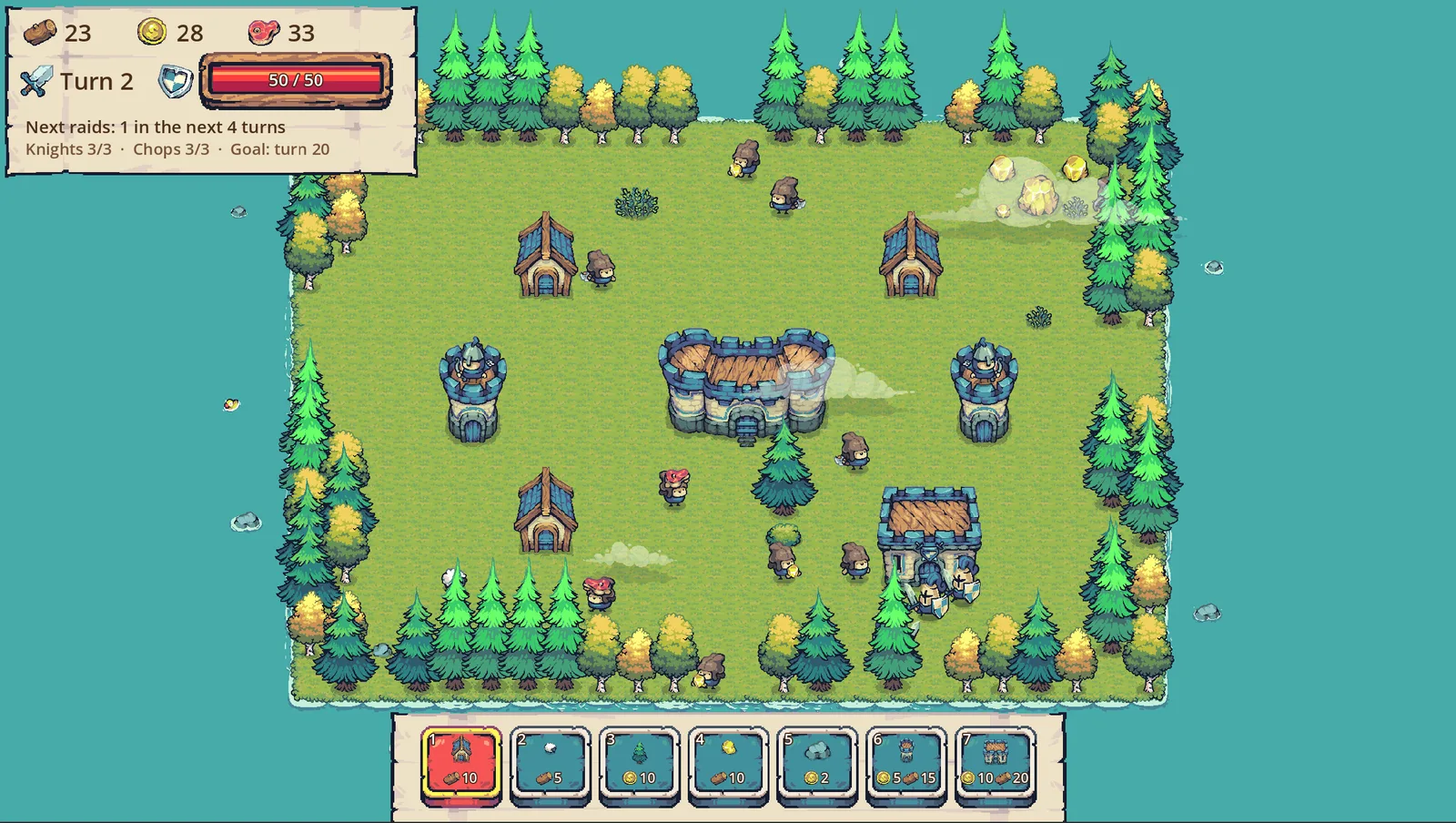
This is the game the student builds, step by step, in this level.
What game development gives a student
A path to a growing careerGaming is one of the fastest growing industries in the Kingdom, and its skills carry over to software, app design, artificial intelligence and simulation. A student who builds games is already building toward a profession.
Maths and physics they can see workingCoordinates, angles, speed, gravity and probability stop being exercises on paper. They become tools the student uses to move characters and shape a world, so the lesson finally makes sense.
Logic and problem solvingEvery game is a chain of rules and decisions. The student learns to break a big idea into small steps, think through every case, and track a bug down until it is fixed.
A hobby that builds real skillsHours that went only into playing now go into making something to be proud of: imagination, art, story and code in one project they can show family and friends.
Why game development
$213.9BGlobal games revenue in 2026More than film and music combined.
3.7BPlayers worldwideAbout 62% of everyone online plays games.
39,000New jobs by 2030The target of Saudi Arabia's National Gaming and Esports Strategy.
Roles in game development
A game is made by a team. While building City Defence a student tries several of these roles, and finds the ones they enjoy most.
Game programmerWrites the code that makes everything work: the rules, the movement and how enemies behave.
Game designerDecides the rules of the game and what makes it fun, fair and worth playing again.
Game artistDraws the characters, buildings and world the player sees on screen.
Audio designerCreates the music and sound effects that give the game its feel.
Level designerBuilds the maps and challenges, and how hard each one gets.
Game testerPlays the game to find bugs and rough edges before players do.
Six game developer skills, stage by stage
One game, from an empty project to a finished release. Each stage builds part of it and adds a real game developer skill.
1Game programmingThey open Godot and write their first GDScript: nodes, scenes and a game loop that runs 60 times a second.
2Environment designThey build the island from small tiles, layering ground, forest and water, and placing every object by its coordinates.
3Interaction designThey make the game answer the player: a click on the map places a house, and every building becomes a reusable scene.
4Working with assetsThey bring ready-made game art into the project and cut sprite sheets into frames, so villagers wander the town with real animation, then set up a camera that pans and zooms.
5Fun and balanceThey run wood, gold and food every turn and tune the numbers until the game is fun: not so easy it gets boring, not so hard it gets frustrating.
6Challenge design and publishingThey program enemy raids, archer towers and the rules for winning and losing, then export the finished game and share it with family and friends.

 New jobs by 2030The target of Saudi Arabia's National Gaming and Esports Strategy.